
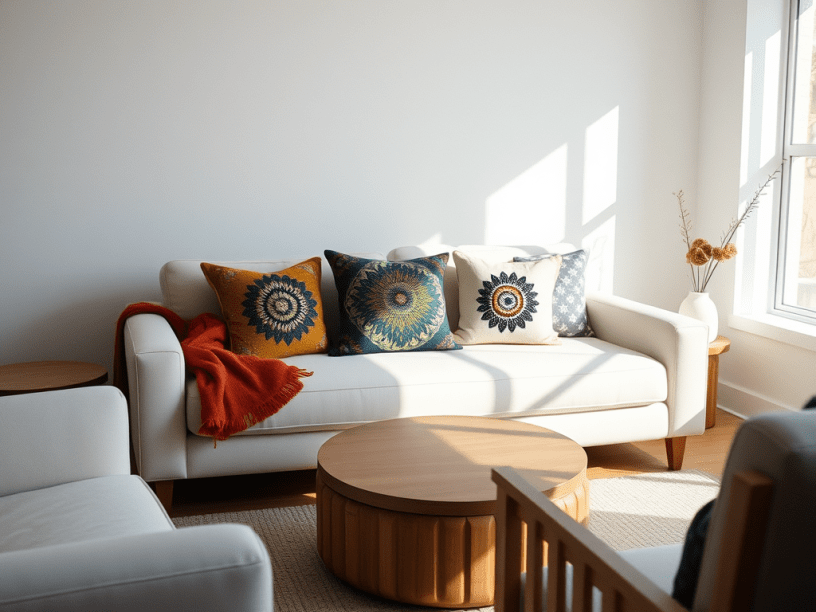
Creating a Minimalist Living Room with a Boho Color Palette: Finding Harmony in Simplicity and Style
When it comes to home decor, the minimalist and bohemian styles might seem like polar opposites. Minimalism embraces simplicity, clean lines, and a “less is more” philosophy, while boho (short for bohemian) design is known for its vibrant colors, eclectic patterns, and a relaxed, lived-in feel. However, integrating these two styles can result in a beautifully balanced living room that exudes both tranquility and character. Here’s how to achieve a minimalist living room while still embracing the rich, expressive colors of a boho palette.
Understanding the Core Concepts
Minimalism focuses on decluttering and creating spaces that are functional and visually calm. It prioritizes simplicity and quality over quantity.
Boho Style, on the other hand, celebrates individuality and creativity, often using bold colors, layered textures, and eclectic decor. It’s a style that thrives on personal expression and comfort.
Combining these styles involves maintaining the minimalist ethos of simplicity while allowing the vibrant, bohemian color palette to enhance and enliven the space. Let’s explore how to achieve this balance.
1. Start with a Neutral Base
The foundation of a minimalist living room should be a neutral color palette. Opt for shades of white, beige, gray, or taupe for walls, floors, and major furniture pieces. These colors create a calm, uncluttered backdrop that aligns with minimalist principles and allows the boho color palette to shine without overwhelming the space.
Neutral Walls and Flooring: Choose light, neutral tones for your walls and flooring. White or soft beige walls make the room feel open and airy, while natural wood or light-colored flooring adds warmth without introducing too much visual noise.
2. Integrate Boho Colors Strategically
While minimalism emphasizes simplicity, you can introduce boho colors in a way that complements the overall aesthetic without cluttering it. Here’s how:
Accent Pieces: Use vibrant boho colors in small accent pieces such as throw pillows, rugs, or curtains. These items can feature rich colors like teal, rust, mustard, or deep blue, which add personality to the room without dominating it.
Art and Decor: Select a few carefully chosen art pieces or decorative items that incorporate boho colors. A statement piece of artwork or a colorful woven wall hanging can provide a focal point and add character to your minimalist space.
Textiles: Introduce boho colors through textiles such as cushions, blankets, and rugs. Opt for patterns and textures that evoke a bohemian feel but keep them limited in number to avoid visual clutter. A colorful rug or throw blanket can be a great way to add boho flair without overwhelming the room.
3. Embrace Layered Textures
Boho style often includes a mix of textures that add depth and warmth. You can incorporate these textures while keeping the overall look minimalist.
Layered Rugs: Consider layering rugs to add texture and color. A neutral, minimalist rug can act as a base, while a smaller, colorful boho rug can be layered on top for added interest.
Textured Fabrics: Use textured fabrics in a limited way to add warmth and richness. Look for throw pillows with fringe, woven patterns, or chunky knits. These elements add tactile interest without cluttering the space.
4. Choose Simple, Functional Furniture
In a minimalist living room, furniture should be functional and unadorned. Opt for sleek, modern pieces with clean lines. When selecting furniture for a room with a boho color palette, choose pieces that have simple shapes but can complement or contrast with boho-colored accents.
Sofa and Chairs: Choose a neutral-colored sofa and chairs with minimalist designs. This provides a calm base and allows colorful accessories to stand out.
Coffee Tables and Storage: Select simple coffee tables and storage solutions that blend seamlessly with the space. Materials like natural wood or metal can add a touch of elegance without detracting from the minimalist feel.
5. Incorporate Boho-Inspired Patterns Sparingly
Boho style is known for its patterns, but in a minimalist setting, it’s important to use patterns sparingly. Select patterns that complement the color scheme and don’t overwhelm the room.
Patterned Pillows and Throws: Use patterned pillows or throws as accents rather than focal points. Choose patterns that incorporate your boho color palette and are consistent with the minimalist aesthetic, such as geometric or tribal prints.
Artwork: When choosing artwork, opt for pieces with abstract patterns or simple designs that reflect the boho color scheme without being too busy.
6. Maintain a Clutter-Free Environment
One of the key principles of minimalism is to keep the space free from unnecessary items. This is especially important when incorporating boho colors, as too many vibrant elements can quickly lead to visual clutter.
Declutter Regularly: Regularly assess the items in your living room and remove anything that doesn’t serve a purpose or contribute to the overall design. Keep surfaces clean and clear to maintain a sense of calm and order.
Storage Solutions: Invest in stylish, minimalist storage solutions to keep belongings organized. This ensures that colorful items and decorative pieces are displayed intentionally rather than scattered.
7. Add Greenery for a Natural Touch
Plants are a great way to introduce life and color into a minimalist living room while aligning with the boho aesthetic. Choose low-maintenance plants with interesting textures and shapes.
Potted Plants: Opt for a few potted plants in simple, neutral pots. Plants like succulents, fiddle leaf figs, or hanging vines add a natural element that complements both minimalist and boho styles.
Planters: Use planters with a boho touch, such as macramé hangers or woven baskets, to introduce subtle bohemian details without overwhelming the space.
Conclusion
Combining minimalism with a boho color palette is a creative way to design a living room that feels both serene and vibrant. By starting with a neutral base, integrating boho colors strategically, and incorporating textures and patterns sparingly, you can achieve a harmonious balance between simplicity and expressive style. The key is to maintain a clutter-free environment while allowing the rich, bohemian colors to add warmth and personality. This approach ensures that your living room remains a peaceful retreat that reflects your unique sense of style.

