
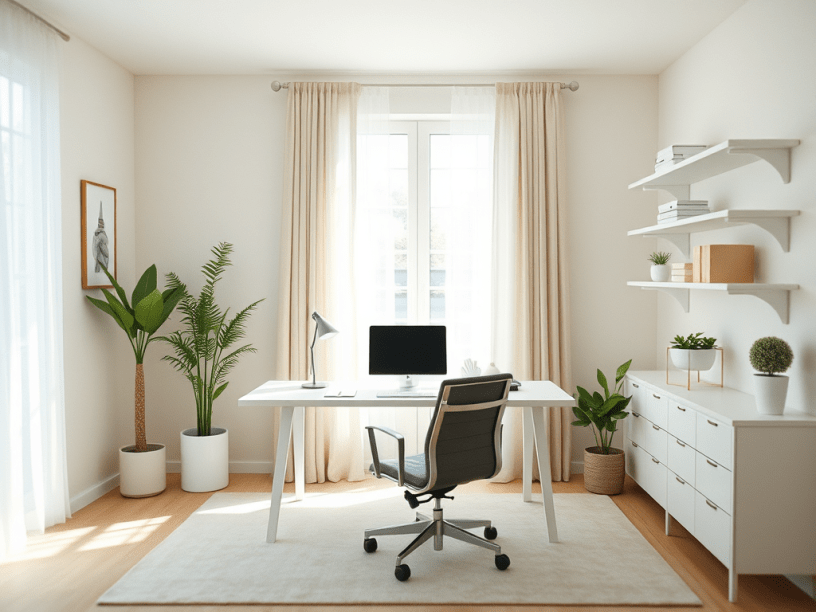
How to Achieve Minimalism in Your Home Office
Minimalism is more than just an aesthetic; it’s a lifestyle that promotes clarity and focus by eliminating unnecessary distractions. For a home office, embracing minimalism can transform your workspace into a clean, efficient, and inspiring environment. Here’s how you can design a minimalist home office that boosts productivity and keeps you motivated.
Neutral Palette: A minimalist home office begins with a neutral color scheme. Shades like white, beige, soft gray, or muted pastels create a calm and uncluttered atmosphere. Add subtle pops of color through a desk accessory, a piece of art, or a small indoor plant to prevent the space from feeling sterile.
Prioritize Decluttering: Minimalism thrives on simplicity. Begin by removing everything from your desk and sorting items into three categories: essentials, non-essentials, and items to discard. Keep only the tools and supplies you genuinely need, like your computer, a notepad, and a pen holder. Store non-essential items in drawers or shelves to maintain a clean surface.
Invest in Functional Furniture: Choose furniture that is both practical and visually streamlined. Look for desks with hidden storage or cable management systems to keep wires out of sight. An ergonomic chair that complements your workspace is essential for comfort and maintaining a minimalist aesthetic.
Embrace Smart Storage Solutions: Efficient storage is key to maintaining a clutter-free office. Some useful tools are wall-mounted shelves, Storage boxes or organizers, and drawer dividers.
Minimize Decorations: Keep decorative elements to a minimum. A single piece of framed artwork, a motivational quote, or a small, vibrant plant can add personality without overwhelming the space. Ensure every decorative item serves a purpose or sparks joy.
Optimize Natural Light: Position your desk near a window to make the most of natural light. This not only reduces reliance on artificial lighting but also creates a sense of openness. Use sheer curtains or blinds to control brightness while maintaining an airy feel.
Tackle Cable Clutter: Visible cables can ruin the clean look of a minimalist office. Use cable organizers like clips, ties, or sleeves to bundle cords neatly. Under-desk trays hide cables out of sight.
Go Paperless: Reduce the need for physical storage by digitizing your documents. Scan important papers and organize them into cloud-based systems. Use apps for note-taking and task management to eliminate piles of sticky notes and notebooks.
Incorporate Multi-Functional Accessories: Simplify your workspace by using items that serve multiple purposes, such as a lamp with built-in USB ports or wireless charging.
Maintain the Minimalist Look: A minimalist office requires consistent upkeep. Regularly evaluate your space and remove anything that doesn’t belong. Adopt a “one in, one out” rule for new additions—whenever you bring in something new, get rid of an old item.
Conclusion: Creating a minimalist home office doesn’t mean sacrificing comfort or personality. By focusing on functionality, organization, and simplicity, you can design a workspace that fosters productivity and peace of mind. Start small, and remember: less is more. Minimalism isn’t just about the space you create; it’s about cultivating a mindset that lets you focus on what truly matters.
 The Minimalist NRI