
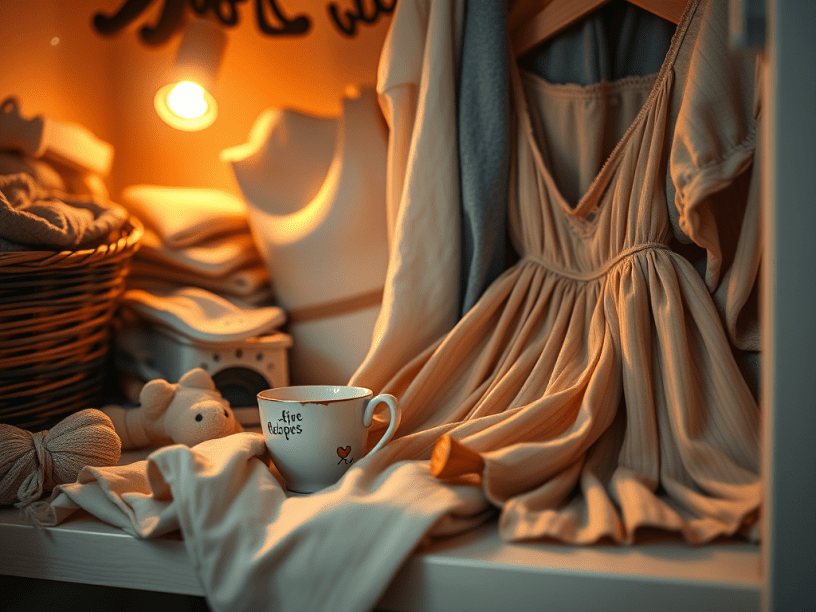
It is never easy to let go sentimental items, for they carry emotional value, symbolizing memories of precious times gone by. If you struggle with letting go such items, which are now occupying space in your closet, here’s a guide to you let them go with grace and minimal regret:
Reflect on Their Purpose. Yes, they were once a part of something you valued, something which is now a precious memory. Maybe a chipped cup which you and your siblings often fought over when you were little, etc. The first step here is to identify why you are holding on to the item. Does it bring you joy? Or maybe it reminds you of someone. Or maybe it symbolizes a significant achievement. Acknowledge the Memories. Understand that the memories associated with the item are in your heart, not the object itself, for why else would you hold on to a torn dress or a chipped cup? Think about it this way: would you not want to let the item move on to its own next stage of life? Maybe someone can craft beautiful kerchiefs from the dress, or the cup might serve in someone’s art project.
Set Clear Goals. Decluttering is not a mindless activity. It is done with a specific goal in mind, to create space, to clear out a packed drawer, to simplify your life, to prioritize practicality over nostalgia, to reduce things in preparation for a move. Once you know your goal, the act of decluttering becomes feasible, for you are now working in a certain direction, with a destination in mind, and you then know just how you want to get there, allowing you to establish limits for each category of items.
Start Small. Baby steps always. The bigger the deal, the smaller your steps should be. If you are new to this process, you’d do best to begin with items that are easy to declutter, thereby building confidence. Items which possess the least sentimental value, items are too damaged beyond repair, items you received as gifts but never liked anyway, items you’d rather “accidentally” lose, are some examples of where you can start. When you see the effects of decluttering those items, your confidence and strength both magnify, and that’s when you are ready to tackle the bull by its horns. Even so, a “maybe” box, much like the “maybe” peg in fitting rooms in clothes shops would be a good idea to temporarily park uncertain items and revisit them later with fresh perspective.
Preserve the Memory. Letting go sentimental items does not mean forgetting what you treasured. Take pictures of the items, preferably in digital format, so you can browse through them whenever and wherever the nostalgia hits. This might be a good time to start penning stories to document the significance of certain items. A digital diary will even let you attach the picture to the piece, and an added benefit – you can share them with whoever you wish, to spread the joy the memories bring you!
Repurpose or Rehome. Decluttering simply means minimizing clutter. Transform the clutter into something useful, and voila, you have something valuable and precious all over again! Tee-shirts into quilts, photos into scrapbooks, tiny items into fridge magnets, are just some examples of how creative you can get with your stuff. Another alternative is to donate or gift items to someone who will cherish them, ensuring their continued use. The crib we used in our home was two generations old, has seen more than a few babies, and is now with the friend of a friend of a friend.
Embrace Gratitude. You are letting go the item which served you with a special memory. Thank it for its role in your life before releasing it. That way, you’ll feel a sense of lightness, and unburden yourself of the guilt that usually fills up the empty space created by the removal of the item. Shift attention to meaningful items you’ve kept and how they enrich your life.
Seek Support. It can be therapeutic to share the decluttering process with family or friends, not merely because they can understand the sentiment, but also because it is an opportunity for everything to take a walk down the memory lane together, thereby cherishing the old memories while also paving the way to create new ones. Objective view is an added bonus. If you are in a place where you want or need to minimize but nothing seems to work, not even the presence of family or friends, then you may want to go ahead and hire a professional decluttering expert. Just like a skilled doctor, who knows how to diagnose and treat a health issue, a decluttering expert can diagnose and treat the pain areas of clutter, holding your hand and guiding you through the journey.
Self-Compassion. Do unto yourself as you would do unto others. Be kind to yourself. Forgive yourself. Love yourself. Prioritize yourself. It is okay to let go items, thoughts, guilt, relationships that no longer serve you. It is okay to appreciate the space, clarity and freedom that you gain by decluttering.
Letting go the tangible and intangible symbols allows for space to cherish and savor the memories in a more wholesome and positive way, one that nourishes your mind and soul with a sense of fulfillment and peace.
 The Minimalist NRI