
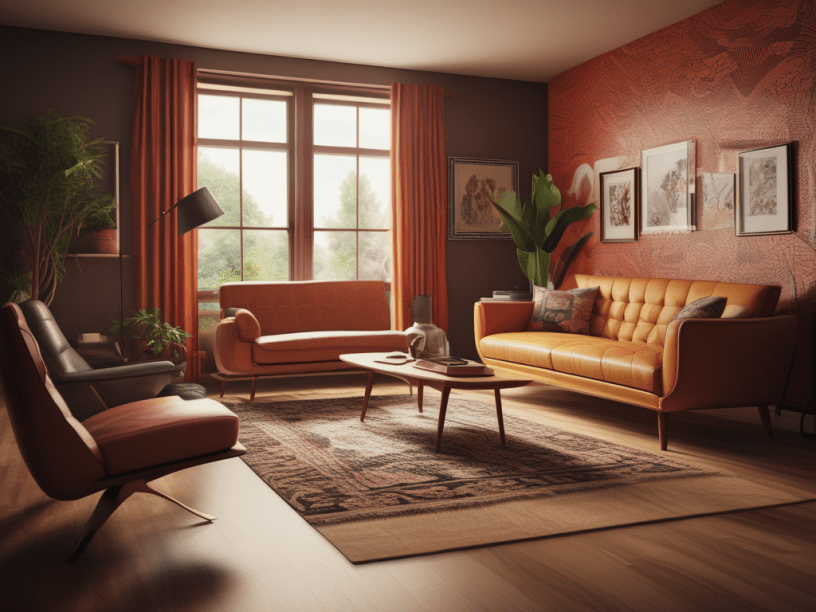
Modern, sleek, sophisticated, modular, are some words I hear a lot in my work. In this era of instant gratification, where dishwashers are the norm in almost every household in America, and line drying laundry is frowned upon as uncouth, I found a nostalgic charm in a retro living room in a home. I asked them about their sources. They smiled. They had newly purchased the house, but the house itself had been built almost a century ago, and this couple simply refused to remodel. “Why fix something that isn’t broken?” the lady asked with a wink. I smiled. She had a point. The appliances were all in working order, made in a time when things were built to last.
The previous owners of the house had decorated their home in the mid-century modern style, with liberal use of natural materials, such as wood and leather. The furniture, which they had left behind for the new buyers, was a work of art while still managing to be functional. The earthy hues in the overall color scheme allowed for a freer canvas to create a space that imbibes harmony and exudes warmth.
“Groovy” was a popular term in the 70s, evoking feelings of eclecticism, when people began experimenting with patterns, textures and styles in a bid to put their mark, their brand on furniture. The color palette included bright colors in a casual, relaxed atmosphere. Funky wallpapers too were a thing in the 70s. Sofas expanded in size to accommodate the ever-growing human sizes. Almost every home back then had a lava lamp adding to the eccentric vibe of the era. Paisley patterns, geometric shapes and psychedelic prints sprinkled whimsical vibes over the residence, with velvet, corduroy and suede being tasked with the job of bringing balance with their tactile richness.
Hindsight is always 20/20. Thus, retro revival today is rarely limited to a specific decade, and people usually prefer to create their unique, personalized aesthetic by blending elements from various eras in an eclectic approach. Styles are mixed and matched to create spaces that evoke nostalgia while still retaining the sophistication of the contemporary.
Present day retro look can be easily achieved by a trip to the local thrift store. I have seen several vintage treasures finding a new home in a retro theme. It is important to note the difference between vintage and outdated. Likewise, the balance between vintage and contemporary too is a practiced aesthetic, one that requires careful planning and execution. Fortunately, retro design is perfectly compatible with contemporary sensibilities despite its roots in history. A vintage rug can perfectly accent a modern living room, and the heirloom tresoire you got from your great-aunt can beautifully complement your sleek closet, adding depth, bridging past and present.
Technology makes for an impactful player in retro styles too, with modern refrigerators disguised to look like retro ones. “Caravan” by SaReGaMa series is a classic example of technology. The machine looks like a vintage transistor radio, but is a pre-loaded music player with Bluetooth capabilities. Nostalgic charm thus receives an added boost of life with cutting-edge technology.
Design your own slice of retro haven by focusing on your personal style. To begin, find a sentimental connection with the specific era. Maybe your parents were born in the 70s, or your grandparents were born in the 60s, or maybe you yourself were born in that era. Keep an eye out for vintage pieces that jump at you, something that reminds you of your childhood, a touchstone that triggers a fond memory. Remember to add elements that suit your needs. Maybe you find a mid-century floor lamp to enhance the ambiance, or a souvenir that is similar to something you had as a child.
A retro living room is a design choice combined with a celebration of history, your history, and your creative personal expression. Retro design has the power to transform your living space into a stylish, timeless retreat, because old is always gold.
Picture generated by AI, is used for decorative purposes only
 The Minimalist NRI